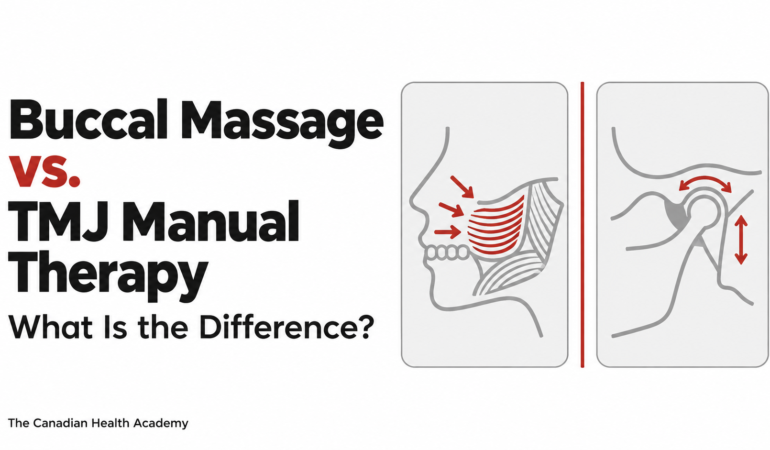
Buccal Massage vs. TMJ Manual Therapy: What Is the Difference? – The Canadian Health Academy blog graphic in Maple Red, black and gray

Buccal Massage vs. TMJ Dysfunction Manual Therapy: What Is the Difference?

“Buccal massage” has gone from a niche technique to a social media trend, and clients now arrive asking for it by name, sometimes for a sore jaw as much as for a facial. At the same time, manual therapy for temporomandibular joint (TMJ) dysfunction is a long-established part of rehabilitation and manual therapy practice. Both can involve working inside the mouth, which is why the two are often confused. For massage therapists, physiotherapists, and other healthcare practitioners, the distinction matters for assessment, consent, evidence and scope of practice. This article explains how they differ, what the research says, and what to consider before adding either to your services.

What Is Buccal Massage?

Buccal massage, also called intraoral massage, takes its name from the Latin word for cheek. In a typical session, the practitioner places gloved fingers inside the mouth, in the space between the teeth and the inside of the cheek, and works with a thumb on the outside to stretch and massage the cheek tissues [1]. It is most often offered as a facial or facial-wellness service, with claims about contouring, puffiness and facial tension.

The evidence base is thin. A university health-science commentary noted that there are no rigorous controlled studies showing that buccal massage produces a lasting change in facial contour, and described claims of a lasting lift as anecdotal [1]. The same source acknowledged that facial massage may give some relief to people with jaw clenching or bruxism when it relaxes tense muscle [1].

What Is Manual Therapy for TMJ Dysfunction?

Temporomandibular disorders (TMD) are considered the main musculoskeletal cause of orofacial pain. They are a group of conditions, and can involve the joint itself, a displaced disc, hypermobility or the muscles of mastication [2]. Manual therapy for TMD is a clinical intervention aimed at a defined problem, such as jaw pain, restricted mouth opening, clicking or muscle tension, identified through assessment.

Techniques vary by practitioner and profession. Trial protocols describe, for example, intraoral release of the masseter, temporalis, and lateral and medial pterygoid muscles using inhibition, along with joint techniques that distract and articulate the mandible [6]. Other approaches treat the cervical region as well, because neck and jaw function are linked [4]. Many programs combine hands-on work with home exercise [2].

Key Differences at a Glance

Feature Buccal massage Manual therapy for TMJ dysfunction
Main purpose Facial wellness, relaxation, appearance-related goals; sometimes jaw tension Reducing pain and improving jaw function in a client with TMD symptoms
How it starts Often a service request Health history, symptom review and a jaw and neck assessment
Techniques Intraoral stretching and kneading of the cheek with outside counter-pressure [1] Intraoral and extraoral soft tissue work, joint mobilization, often cervical work and exercise [2][4][6]
Structures involved Cheek tissues and buccinator region; deeper muscles are sometimes described Masticatory muscles, TMJ, and often the neck
Evidence No rigorous controlled studies of buccal massage itself [1] Randomized trials and systematic reviews, with mixed quality [2][3][4]
Outcomes measured Rarely measured Pain, maximum mouth opening, function [2][3]
Practitioner skill needed Intraoral technique, infection control, consent All of that, plus orofacial assessment, clinical reasoning and referral judgment

Where the Two Overlap

The overlap is real. Both can involve gloved work inside the mouth, and both can touch muscles such as the masseter. A relaxation-oriented buccal massage may ease a clenched jaw, and a TMD treatment may include techniques that look very similar to buccal work. What differs is the clinical framework. In TMD care, the intraoral technique is one tool selected because of an assessment finding, tracked against outcomes such as pain and mouth opening, and paired with advice and exercise. In a standard buccal facial, the technique is the service.

That distinction affects how you describe your work to clients. A practitioner who offers buccal massage for general facial tension should avoid implying that it treats a TMJ condition. A client with persistent jaw pain, locking or clicking deserves an assessment, and possibly a referral, not only a facial.

What Does the Research Say About TMJ Manual Therapy?

Medium-term effects. A systematic review and meta-analysis of six randomized trials, each with at least three months of follow-up, found significant improvement in pain and mouth opening compared with baseline after manual therapy. The effect appeared to fade over time, but combining manual therapy with therapeutic exercise helped maintain the benefit in the longer term [2].

Short-term effects across professions. A 2026 systematic review of 18 randomized trials on manual therapy for TMD, including treatment by different healthcare professionals, concluded that manual therapy may be associated with short-term improvements. The authors framed the question of which techniques and professional approaches work best as still unclear [3].

The cervical spine. A meta-analysis found that cervical manual therapy reduced pain intensity more than placebo manual therapy or minimal intervention in people with TMD, with moderate evidence. Combined cervico-craniomandibular treatment gave larger short-term reductions in pain and improvements in pain-free mouth opening than cervical treatment alone, but the evidence was low [4].

Intraoral massage specifically. A small randomized, placebo-controlled trial of 40 women with muscle-related TMD compared intraoral, extraoral and combined massage. The authors reported that combined and intraoral massage improved signs and symptoms [5]. This is a small, early study reported in a conference abstract, so it should be read as preliminary.

Why the evidence is limited

Across the TMD literature, trials are small, techniques differ, and the quality is variable [2][3]. Neither strong claims nor outright dismissal are supported. For buccal massage as a stand-alone cosmetic treatment, the situation is more basic: there is little research to review at all [1].

Safety, Consent and Scope in Ontario

  • Infection control. Because the practitioner’s fingers are inside the client’s mouth, excellent hand hygiene and infection prevention and control measures, including gloves, are essential [1]. Safety data for buccal massage itself are lacking [1].
  • Informed consent. The College of Massage Therapists of Ontario’s Standards of Practice, in effect since January 1, 2022, cover informed consent, consent for treatment of sensitive areas, an evidence-informed approach, and staying within the massage therapy scope of practice [7]. Intraoral work calls for especially clear explanation and consent.
  • Know when to refer. Good practice is to defer or refer when a client presents with recent facial or jaw trauma, a jaw that is locked or cannot open, signs of infection or dental pain, unexplained swelling, or neurological symptoms. Apply your own profession’s guidance here.
  • Check your scope and coverage. Confirm with your regulatory college and professional liability insurer that intraoral techniques are within your scope and covered before offering them.

Which Should You Offer?

The answer depends on your profession and your clients:

  • If your clients mainly want facial relaxation: buccal massage may fit a wellness-oriented service, as long as you are transparent about the limited evidence, avoid contouring or treatment claims, and meet infection-control and consent standards.
  • If clients present with jaw pain, clicking or limited opening: a TMD-focused approach built on assessment, outcome tracking, cervical screening and home exercise is better supported by research [2][4].
  • If you want to do both: keep the two services clearly separate in how you book, document and describe them.

Building Your Skills with Healthcare Continuing Education in Ontario

Jaw and facial work builds on strong head, neck and soft tissue skills. If you are looking for healthcare continuing education in Ontario to support this kind of practice, The Canadian Health Academy offers hands-on courses in Mississauga that complement it:

As a health academy in Ontario, we provide healthcare training and healthcare therapy training for practitioners who want to expand their skills. Browse every program on our courses page, see our Continuing Education Brampton page for healthcare continuing education in Brampton, or visit the Registration page. Looking for healthcare certification courses and continuing education for healthcare professionals in Ontario? Contact us and we will help you find the right fit.

Frequently Asked Questions

Is buccal massage the same as TMJ massage?

No. Both can involve intraoral work, but buccal massage is usually offered as a facial service, while TMJ manual therapy is a treatment for a client with jaw symptoms, based on assessment and outcome tracking [1][2].

Does buccal massage help TMJ pain?

Facial massage may relieve some tension in people who clench or grind, but there is no rigorous research on buccal massage itself for TMJ conditions [1]. Manual therapy aimed at TMD has a larger research base, though of mixed quality [2][3].

Is intraoral massage safe?

Safety data for buccal massage are lacking, and infection control is essential because fingers are inside the mouth [1]. Screening, informed consent and appropriate referral are key.

Can Registered Massage Therapists in Ontario do intraoral work?

This depends on your scope of practice, training and your college’s standards. Confirm with the College of Massage Therapists of Ontario and your insurer before offering it [7].

Conclusion

Buccal massage and manual therapy for TMJ dysfunction share a technique but not a purpose. Buccal massage is typically a facial wellness service with little supporting research. TMJ manual therapy is a clinical intervention built on assessment, outcome measures, and, ideally, exercise, with a research base that is promising but mixed. For practitioners, the value lies in knowing which you are offering, describing it honestly, screening carefully and staying within scope.

This article is for educational purposes for healthcare and wellness professionals and does not replace individual clinical assessment. Check your regulatory college and insurer regarding scope of practice.

References

  1. University of Technology Sydney. Could buccal massage make you look older, not younger? UTS Newsroom, 16 February 2023. uts.edu.au
  2. Herrera-Valencia A, Ruiz-Muñoz M, Martín-Martín J, Cuesta-Vargas A, González-Sánchez M. Efficacy of manual therapy in temporomandibular joint disorders and its medium- and long-term effects on pain and maximum mouth opening: a systematic review and meta-analysis. Journal of Clinical Medicine. 2020;9(11):3404. doi:10.3390/jcm9113404
  3. Efficacy of manual therapy by different healthcare professionals on pain and function in temporomandibular disorders: a systematic review of randomized controlled trials. 2026. doi:10.1080/10669817.2026.2629282
  4. Effect of manual therapy and therapeutic exercise applied to the cervical region on pain and pressure pain sensitivity in patients with temporomandibular disorders: a systematic review and meta-analysis. Pain Medicine. 2020;21(10):2373-2384. doi:10.1093/pm/pnaa021
  5. Gama MCS, Rizatti-Barbosa CM, Alves MC, Bérzin F. Techniques of massage therapy in myogenous temporomandibular disorder: a randomized placebo-controlled trial. Conference poster, International Society of Biomechanics, 2013. isbweb.org
  6. The effect of intra-oral osteopathic technique on pain, maximum mouth opening, and disability in patients with chronic temporomandibular joint disorder. Australian New Zealand Clinical Trials Registry. anzctr.org.au
  7. Registered Massage Therapists’ Association of Ontario. New CMTO Standards of Practice (effective January 1, 2022). rmtao.com
Read More
Cupping Therapy: What the Evidence Says – The Canadian Health Academy blog graphic in Maple Red, black and gray

Cupping Therapy for Practitioners: What the Evidence Says and How to Get Trained in Ontario

Round, circular marks on a client’s back have become a familiar sight in clinics, gyms and on social media, and more clients now ask their therapists about cupping by name. For massage therapists, physiotherapists, kinesiologists and other healthcare practitioners, the practical questions are the same as for any adjunct technique: what does the research actually show, how safe is it, and what training should you have before you use it? This article answers those questions from the published literature, and then looks at what to consider when choosing a cupping therapy course in Ontario.

What Is Cupping Therapy?

Cupping applies cups to the skin to create negative pressure (suction) over a treatment area. It is an ancient practice, and today it is used mainly for musculoskeletal pain and soft tissue complaints [5]. Clinicians describe several types, including dry cupping, wet cupping, and cupping massage, where cups are moved over lubricated skin [7]. A typical cupping set contains a range of cup sizes and a method of creating suction [7].

It is worth being upfront about mechanism. A modern medicine overview concluded that there is no clearly identified mechanism of action for cupping, and called for more clinical research on how it works [7]. Proposed explanations, such as increased local blood flow and changes in pain signalling, remain theories rather than established facts.

What Does the Research Show?

As with many manual therapy tools, the evidence is encouraging in places but limited in quality. The findings depend on the condition, what cupping is compared against, and the time point measured.

Evidence suggesting a benefit

Chronic pain. A meta-analysis of 18 randomized trials (1,172 participants) found large short-term reductions in pain intensity with cupping compared with no treatment, and medium-sized improvements in disability compared with both no treatment and other active treatments [2].

Neck pain. A systematic review and meta-analysis of randomized trials found that cupping reduced neck pain compared with no intervention or active controls, and also when added to another treatment [1].

Musculoskeletal and sports rehabilitation. A systematic review of 22 studies rated the evidence for improving soft tissue flexibility as moderate, and the evidence for low back pain and cervical pain as low to moderate [5].

Mapping the wider literature. An evidence-mapping study of 14 meta-analyses concluded that very low to moderate quality evidence supports cupping for several pain-related conditions, including neck pain, low back pain and knee osteoarthritis [3].

Evidence suggesting limited or uncertain benefit

Sham-controlled comparisons. In the same chronic pain meta-analysis, the effect of cupping on pain was not statistically significant when compared with sham cupping [2]. This suggests that part of the observed benefit may come from non-specific effects such as touch, expectation and the treatment ritual.

No high-quality evidence. The evidence-mapping study found no high-quality evidence, using the GRADE system, demonstrating that cupping works for pain-related outcomes, and graded the methodological quality of the included reviews as mostly low or critically low [3].

Review quality and athletes. An umbrella review of systematic reviews found that most had low methodological quality. It reported that cupping performed better than passive interventions such as heat therapy, usual care, medication or no treatment, but showed similar effectiveness to acupuncture, and concluded there was not enough evidence to recommend cupping for athletes [4].

Why the evidence is inconsistent

Across these reviews, the recurring limitations are small trials, clinical heterogeneity (different cupping types, cup sizes, pressures and durations), risk of bias, and the difficulty of creating a convincing sham [2][3][4]. The sensible reading is that cupping may offer short-term benefit for some people with musculoskeletal pain, but the research does not yet allow strong claims.

Is Cupping Safe? Adverse Events and Contraindications

Cupping is generally considered relatively safe, but adverse events are not zero. A review of adverse events concluded that cupping-related events were infrequently reported but not rare, and that most were mild to moderate in severity [7]. Reported events include bruising (hematoma), pain at the application site, increased pain, tingling and dizziness [4]. In the chronic pain meta-analysis, adverse events were more frequent with cupping than with no treatment, though not significantly different from sham or other active treatment [2]. In the neck pain review, only 8 of 18 studies reported adverse events at all, and those that did described them as mostly mild and temporary [1].

An important point for training: reviews of adverse events conclude that many are avoidable when treatment is delivered by trained personnel who follow safety guidelines and infection control practices [6][7].

Commonly listed contraindications and precautions include [7]:

  • Do not apply over: veins, arteries, nerves, inflamed or damaged skin, body orifices, the eyes, lymph nodes or varicose veins.
  • Absolute contraindications include: open wounds, bone fractures and sites of deep vein thrombosis.
  • Relative contraindications include: acute infection, use of anticoagulants, severe chronic disease such as heart disease, pregnancy, menstruation, anemia, recent blood donation and a recent wet cupping session.

Good practice also means a proper intake, clear informed consent, explaining to clients that marks are expected and usually fade, and stopping if a client feels faint, or has blistering or significant pain.

What This Means for Your Practice

  • Treat it as an adjunct. Several trials tested cupping alone and as an add-on, and the add-on findings are the most practical for clinic work [1].
  • Set honest expectations. Tell clients that the research is promising but limited, and that benefits, when seen, are mostly short term [2].
  • Measure and reassess. Record pain and function before and after, and stop if the client is not benefiting.
  • Screen carefully. A thorough health history is the main protection against preventable adverse events [6][7].
  • Know your scope. Check with your regulatory college and professional liability insurer that cupping is within your scope and covered before adding it to your services.

Choosing a Cupping Therapy Course in Ontario

If you decide to add cupping to your treatments, the quality of your training matters, because safe technique, screening and infection control are what the safety literature points to [6][7]. When comparing a cupping therapy course in Ontario, it helps to ask:

  • Is it hands-on? Cup selection, pressure, and technique are practical skills best learned with supervised practice.
  • Does it cover contraindications, consent and infection control? These should be core content, not an afterthought.
  • Does it teach clinical reasoning? You should leave knowing when to use cupping, when to modify it and when to refer.
  • Does it give you a certificate you can use? Confirm that the certificate meets your regulatory college or association’s continuing education requirements.
  • Is it convenient? Practitioners across the Peel region look for cupping therapy training in Mississauga or Brampton to avoid long commutes.

Frequently Asked Questions

Does cupping therapy work for pain?

The evidence is mixed but suggests short-term benefit compared with no treatment, particularly for neck and low back pain. However, it was not significantly better than sham cupping in a major meta-analysis, and no high-quality evidence has been found [2][3].

Is cupping therapy safe?

It is relatively safe when performed by trained practitioners who screen clients properly. Adverse events such as bruising and pain at the site are mostly mild to moderate, but they are not rare [4][7].

Do I need certification to learn cupping?

Requirements depend on your profession and regulatory body. Regardless, formal training in technique, contraindications and infection control is strongly supported by the safety literature [6][7]. Check your college and insurer.

Is cupping the same as Gua Sha?

No. Cupping uses suction, while Gua Sha uses a tool to scrape or glide over the skin. Read our guide to Gua Sha vs. IASTM for how tool-based soft tissue techniques compare.

Conclusion

Cupping is a popular, generally well-tolerated technique that may give some clients short-term relief from musculoskeletal pain, particularly as an add-on to other care. The research does not yet show that it outperforms sham treatment, and the quality of the evidence is limited. For practitioners, the value lies in careful screening, skilled and hygienic technique, honest communication and regular reassessment.

If you would like to learn cupping in a supervised, hands-on setting, explore The Canadian Health Academy’s Cupping Therapy course at our Mississauga location, or visit our Registration page for upcoming dates. Practitioners in Brampton can also see our Continuing Education Brampton page for healthcare continuing education options. As a health academy in Ontario, we offer healthcare training and therapy courses for practitioners who want to expand their skills, and you can browse all of our courses here.

This article is for educational purposes for healthcare and wellness professionals and does not replace individual clinical assessment. Check your regulatory college and insurer regarding scope of practice.

References

  1. Kim S, Lee SH, Kim MR, et al. Is cupping therapy effective in patients with neck pain? A systematic review and meta-analysis. BMJ Open. 2018;8(11):e021070. doi:10.1136/bmjopen-2017-021070
  2. Cramer H, Klose P, Teut M, et al. Cupping for patients with chronic pain: a systematic review and meta-analysis. Journal of Pain. 2020;21(9-10):943-956. doi:10.1016/j.jpain.2020.01.002
  3. Wang L, Cai Z, Li X, Zhu A. Efficacy of cupping therapy on pain outcomes: an evidence-mapping study. Frontiers in Neurology. 2023;14:1266712. doi:10.3389/fneur.2023.1266712
  4. Elmeligie MM, Yehia AH, Hamada Mohamed M, et al. Effectiveness of cupping therapy for musculoskeletal pain: an umbrella review. Human Movement
  5. Mohamed AA, Zhang X, Jan YK. Evidence-based and adverse-effects analyses of cupping therapy in musculoskeletal and sports rehabilitation: a systematic and evidence-based review. Journal of Back and Musculoskeletal Rehabilitation. 2023;36(1):3-19. doi:10.3233/BMR-210242
  6. Kim TH, Kim KH, Choi JY, Lee MS. Adverse events related to cupping therapy in studies conducted in Korea: a systematic review. European Journal of Integrative Medicine. 2014;6(4):434-440.
  7. Cupping Therapy: An Overview from a Modern Medicine Perspective. Journal of Acupuncture and Meridian Studies. 2018. iam.biomedcentral.com
Read More
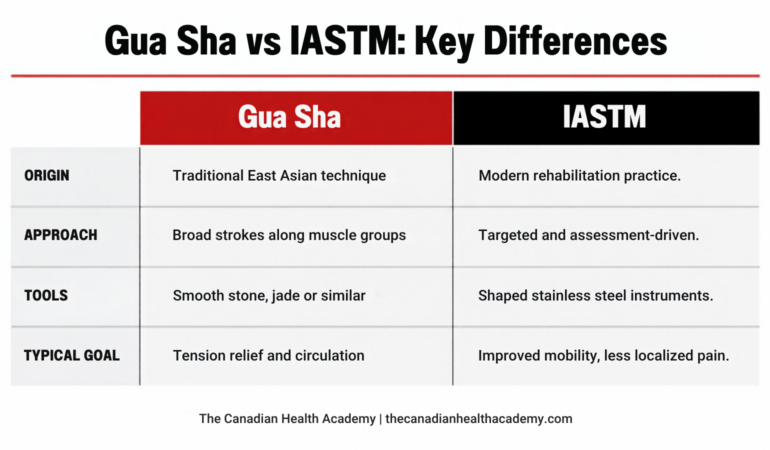
Gua Sha vs IASTM comparison chart showing differences in origin, approach, tools and typical goals

Gua Sha vs. IASTM: What’s the Difference, and Which Should You Learn?

Clients are asking about both, and the two are often lumped together. Gua Sha vs IASTM is one of the most common questions practitioners have when deciding which hands-on tool technique to add to their practice. Both use a smooth-edged tool on the skin to influence soft tissue, but they come from different traditions and are used for different reasons.

What Is Gua Sha?

Gua Sha is a traditional East Asian technique. The practitioner applies oil, then strokes the skin with a smooth tool, often in long, repeated strokes. It can leave temporary redness or small red marks called “sha,” which is part of the traditional approach. Gua Sha is commonly used for muscle tension, circulation and general wellness work.

What Is IASTM?

Instrument-Assisted Soft Tissue Mobilization (IASTM) is a modern, clinically oriented method. Practitioners use specially shaped tools, often stainless steel, to assess and treat soft tissue restrictions. It is popular in rehabilitation and sports settings, where the goal is usually to improve mobility and reduce pain around a specific area.

Gua Sha vs IASTM: The Key Differences

  Gua Sha IASTM
Origin Traditional East Asian technique Modern rehabilitation practice
Approach Broad strokes along muscle groups Targeted and assessment-driven
Tools Smooth stone, jade or similar materials Shaped stainless steel instruments
Typical goal Tension relief and circulation Improved mobility and less localized pain

Research on both techniques is still developing and results are mixed, so practitioners should be honest with clients about expected outcomes.

Which Should You Learn: Gua Sha or IASTM?

It depends on your clientele. If you work in wellness or relaxation-focused massage, Gua Sha training is a natural fit. If you treat sports injuries or movement restrictions, IASTM certification may serve you better. Many practitioners find the two complement each other, and learning the foundations of both means you can choose the right tool for each client.

A Note on Scope of Practice

Before adding either technique, check with your regulatory college (for example, the College of Massage Therapists of Ontario for Registered Massage Therapists) and your insurer to confirm it falls within your scope of practice.

Train With The Canadian Health Academy

Our Gua Sha & IASTM course teaches both techniques in a hands-on setting for massage therapists, healthcare professionals and wellness practitioners. Explore all of our CEU-accredited training on our courses page.

Read More

Your Clients Have Seen the Brazilian Lymphatic Drainage Videos. Can You Deliver It?

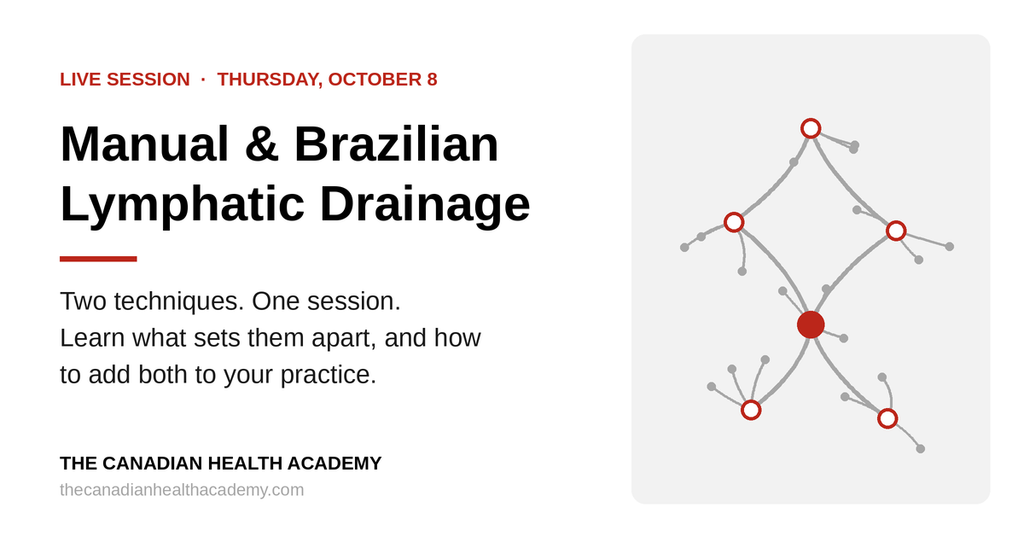
Graphic announcing a live session on Manual and Brazilian Lymphatic Drainage on Thursday, October 8

Scroll through social media for five minutes and you’ll see it: fast, sculpting strokes, dramatic before-and-after clips, and millions of views. Brazilian Lymphatic Drainage has gone from a niche technique to one of the most requested treatments in wellness. Now clients are walking into clinics and spas asking for it by name.

Here’s what most of those videos don’t tell you. Behind the trend is a clinical method that has been practised and refined for almost a century. Manual Lymphatic Drainage (MLD) was developed in the 1930s. It is the gentle, rhythmic, evidence-informed technique used alongside healthcare teams around the world.

The two methods sound alike, but they are not the same treatment. Practitioners who understand the difference, and can offer both responsibly, are the ones clients book and rebook.

On Thursday, October 8, The Canadian Health Academy is hosting a live session that breaks it all down.

What We’ll Cover

  • The lymphatic system, made practical. You’ll get a clear, hands-on understanding of how lymph moves through the body. You’ll also learn why direction, pressure and rhythm matter so much in any drainage technique.
  • Manual Lymphatic Drainage (MLD). We’ll cover the principles behind the classic clinical approach: light pressure, slow repetitive strokes and a precise sequence. We’ll also look at where MLD fits in a professional practice.
  • Brazilian Lymphatic Drainage. You’ll see what makes this faster, more vigorous, aesthetics-focused method different. We’ll explain why it has exploded in popularity and what clients usually expect when they book it.
  • Side-by-side comparison. We’ll compare pressure, pace, goals and session flow, and which client suits which approach. That way you can answer the question “which one do I need?” with confidence.
  • Safety and contraindications. You’ll learn when lymphatic work is not appropriate, when to refer out, and how to set honest expectations. That means no overpromising, and no “detox” or weight-loss claims.
  • Building it into your business. We’ll go over how certified lymphatic drainage training can expand your service menu, support CEU requirements and set you apart in a crowded market.
  • Live Q&A. Bring your questions about technique, clients and certification pathways.

Who This Session Is For

This session is for Registered Massage Therapists, estheticians, spa and wellness practitioners, and healthcare professionals looking to grow their skills. It’s also for anyone who keeps getting asked about lymphatic drainage and wants to answer like an expert.

Session Details

Date: Thursday, October 8, 2026
Time: 10:30 am 5:30 pm
Format: in person at 1425 Dundas St E., Mississauga.
Cost:
– MLD Level 1 – $500
– MLD Level 2 – $500
– Brazialin MLD – $500
– All 3 courses – $800 – BEST VALUE

Reserve Your Spot

Spaces are limited so everyone can get their questions answered. If clients are already asking you about lymphatic drainage, this is the session that gets you ready.

Questions? Call +1.647.239.9952 or email info@thecanadianhealthacademy.com.

Want to go further? Explore our full Manual Lymphatic Drainage certification course in Mississauga and Brampton.

Read More
Book Your Appointment